TL;DR
- In Q3 2026, 100% of ADMATIC's AI search leads converted to MQLs, and each one traced back through GA4 and the CRM to a specific ADMATIC blog article.
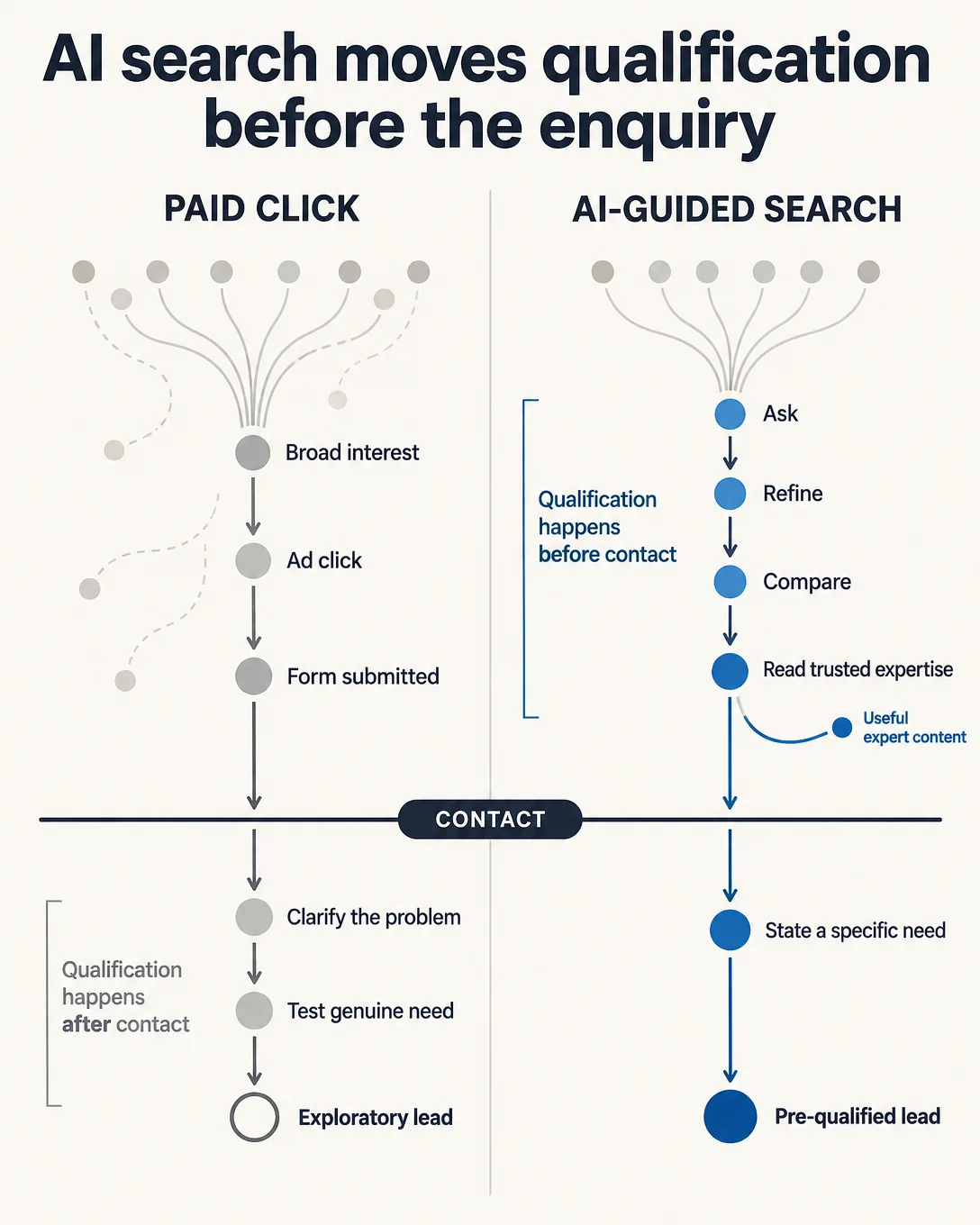
- AI search users arrive pre-qualified, because the conversation with the LLM helps them diagnose their own problem before they enquire.
- ADMATIC's back catalogue, published every two weeks since 2020, became its strongest GEO asset, built on traditional SEO fundamentals.
- LLMs reward content quality, author credibility and genuine expertise, not link farms, purchased backlinks or keyword stuffing.
- AI search leads are still small in volume, with 95% or more of leads coming through established channels, but the channel is growing fast. Plan for GEO now.
How AI Search Leads Converted to MQLs at 100% in Q3 2026
In Q3 of calendar year 2026, every lead that reached ADMATIC through AI search converted to an MQL. One hundred per cent. After two decades in this industry, I learned to distrust click-bait numbers like that. Conversion rates on good campaigns sit at 10, 20, maybe 30 per cent. A perfect score usually means something is broken in the tracking.
So I went back to the raw sources. I pulled the data from GA4, opened our CRM, and examined every lead's timing, path and source individually. I read every query.
The trail was clean. Each enquiry traced directly back to a specific ADMATIC blog article published in the last three to four years. Each person had asked an AI model, been pointed to our content, read it, and deliberately chose to contact us. Nothing about it was accidental.
Who Is the AI Search User?
The AI search user is deliberate, inquisitive and in a genuine problem-solving state. Something in their marketing or business is hurting, and they want a diagnosis before they commit to a treatment.
How AI Search Users Narrow Down a Problem
LLM research follows a clear pattern:
- They ask a question and read the answer.
- They refine the question and ask again.
- By the third or fourth exchange, a vague business challenge has become something specific.
When this person contacts you, they already know why. The enquiry arrives with the reason attached, clear from the first line.
How AI-Referred Leads Differ From Paid Media Clicks
Paid media click intent is ambiguous by design. Someone saw an ad, felt a flicker of interest, and landed. The first conversation is often spent working out what they need, or whether they need anything at all. That has value, but it costs both sides time.
The AI-referred lead skips that stage entirely. Qualification happened inside the conversation with the model, before you knew they existed. Every lead had already decided ADMATIC understood their problem, so the MQL threshold was cleared before the form was submitted.
Why a Back Catalogue of Genuine Content Is Your GEO Asset
A consistent back catalogue of genuine, expert content is the strongest GEO asset a business can own. It took six years to prove. ADMATIC has published articles on average every two weeks since 2020. When we started, GEO didn't exist as a concept.
We wrote for marketers, traditional SEO, and our newsletter and LinkedIn readers. None of it was written for AI models, which weren't referring traffic to anyone in 2020.
Traditional SEO Is Still the Foundation
That turned out to be exactly the right preparation. Traditional SEO remains the foundation of the game. There are GEO nuances to learn, and ADMATIC is learning them like everyone else. But organic marketing fundamentals still hold true, and they're delivering a quiet resurgence for businesses that stayed disciplined.
What LLMs Are Actually Rewarding
LLMs reward three things:
- Content quality.
- Author credibility.
- Genuine insight from people who demonstrably know their subject.
The industry once paid handsomely for experts who manufactured results through link farms, purchased backlinks and keyword stuffing. Those actors are no longer required. Their craft solved for a ranking algorithm. The new environment solves for usefulness.
You cannot fake expertise at scale. A model that has read your entire back catalogue can tell an author who understands media strategy from one who assembled an article from other articles. The only reliable way to get noticed now is strong content, from experts, offering expert advice. There's no shortcut behind that sentence, which is precisely why it works.
Our catalogue behaved like a long-term investment, compounding quietly for six years until it showed all at once in a single quarter.
Now That MQLs Are Converting at 100%, It's Time to Build More of Them
Keeping the Scale of AI Search Leads in Perspective
AI-generated organic leads remain small in nominal terms. Across ADMATIC and businesses we manage, +95 per cent of leads still come through brand marketing, performance marketing, SEO and the other established channels. I'm not suggesting anyone move their budgets wholesale into GEO. Far from it.
What I am saying is that this channel is growing exponentially, and its lead quality is unlike anything we've measured elsewhere. For ADMATIC, a media agency with an organic business arm, the shift arrived suddenly and starkly in Q3 2026. Every business differs, and you can't predict precisely when it will arrive for yours. You can be confident it will.
Why the Time to Take GEO Seriously Is Now
The question is no longer whether to take GEO seriously, but when. The when is now. Marketers who took SEO seriously in 2005 looked no smarter than their competitors until 2008. By then, businesses that waited were years behind on content, authority and trust signals. The same timeline is playing out again.
Whatever your business size, the evidence points one way, and with limited time and resources, focus matters. I recommend GEO become a serious focus in your planning now, built on top of the organic fundamentals you already know.
What One Quarter of AI Search Leads Taught Us About Content
Q3 2026 taught ADMATIC three things:
- AI search users arrive pre-qualified, having diagnosed their own problem with the model first.
- Lead quality comes from producing quality content, producing it consistently, and doing the traditional SEO basics well.
- The GEO nuances can be learned, and the fundamentals underneath them haven't moved.
When I ask what I'd tell the 2020 version of me starting our publishing programme, the answer is one word. Create. Good quality, strong content that provides deep insight. That's the strategy, and it always was.
If you're weighing up where GEO fits in your planning, reach out to an ADMATICian. We're always up for that conversation.